Confidence vs. Self-Confidence: One Keeps You Comfortable and the Other Changes Your Life

Why We Are Drawn to Confidence
Confidence signals safety, competence, and certainty. It reassures us. It feels grounding. We trust people who appear confident, and we often equate confidence with success, authority, and leadership.
Most of us would say we are confident in some areas of our lives and that’s usually true. But confidence is often misunderstood as something permanent, something earned, something checked off once and never revisited.
Confidence is not a finish line.
It is not a personality trait.
And it is not something you achieve once and keep forever.
What Confidence Really Is
Confidence Is Past-Based
Traditional confidence is built on evidence from your past.
You feel confident because:
- You’ve done something before
- You’ve succeeded in similar situations
- You know what to expect
Confidence relies on familiarity. It depends on proof.
That is why people often feel confident only in areas where they already excel and hesitant everywhere else. Confidence grows where experience exists and disappears the moment uncertainty enters the room.
This leads to an uncomfortable but critical insight:
You can only be confident at what you have already done.
Confidence alone does not help you try new things.
It does not help you stretch.
And it does not help you move forward when fear is present.
What Self-Confidence Is and Why It Matters More
Self-Confidence Is Future-Based
Self-confidence does not depend on proof.
It depends on trust.
Self-confidence is your belief that you can handle what comes next, even if:
- You don’t know how yet
- You’ve never done it before
- You might fail
- You feel afraid
Self-confidence develops when you are good at:
- Learning
- Growing
- Trying
- Failing and continuing anyway
This is why self-confidence is often described as the emotion of progress.
You don’t feel self-confident because you are certain of success.
You feel self-confident because you trust yourself to respond, adapt, and recover no matter what happens.
How Confidence and Self-Confidence Feel
Both confidence and self-confidence are emotional states, not permanent traits.
At their best, they feel like:
- A quiet inner steadiness
- A sense of capability and courage
- Feeling secure without being rigid
- Feeling empowered without being arrogant
This distinction matters.
Confidence is not arrogance.
Arrogance is loud, defensive, and fragile.
True self-confidence is calm, grounded, and resilient.
The Real Opposite of Self-Confidence
Self-Doubt and Its Hidden Cost
The opposite of self-confidence is self-doubt.
Self-doubt feels like:
- Insecurity
- Fear
- Low self-esteem
- Feeling incompetent, inadequate, or insignificant
- A fear of being unloved or “not enough”
At the root of self-doubt is always fear.
It sounds like:
- “I don’t know how.”
- “I’ve never done that before.”
- “I’m not experienced enough.”
- “I’m not talented enough.”
- “It’s too hard.”
- “I’m too old.”
- “I’m too young.”
- “I’m not good enough.”
What makes self-doubt so powerful is that it feels true. It feels logical. It feels protective. But it is rarely accurate and it is almost always limiting.
What Self-Confidence Actually Is
Self-confidence is not bravado or blind optimism. It is a skill set.
Self-confidence is:
- Your ability to have your own back
- Your ability to manage the thoughts you think about yourself
- Your ability to trust yourself under uncertainty
- Your willingness to act on faith in yourself
Self-confidence does not remove fear.
It removes fear’s authority.
A Simple Comparison
An Example of Self-Confidence
“I don’t know how this will turn out, but I trust myself to learn, adjust, and handle whatever happens.”
Action follows.
An Example of Self-Doubt
“If I don’t know how, I shouldn’t try. If I fail, it means something about me.”
Hesitation follows.
Why This Matters
Every person has experienced moments of self-confidence and moments of self-doubt. Neither is permanent.
The real question is not whether fear will show up, it will.
The real question is:
How do we generate self-confidence while we feel afraid, so we can move forward?
The answer is not eliminating fear.
The answer is learning to feel.
The Breakthrough: Emotional Willingness
Self-confidence grows when you are willing to feel:
- Fear
- Discomfort
- Embarrassment
- Failure
The worst thing that can happen in most situations is not failure, it is how you will feel.
When you become willing to feel any emotion, fear loses its control. And when fear no longer controls you, progress becomes inevitable.
The 4 Steps to Developing Self-Confidence
Commitment → Courage → Capability → Confidence
- Commitment: Decide in advance that you are moving forward, even if fear is present.
- Courage: Take action while feeling uncertain.
- Capability: Build skills through experience, learning, and repetition.
- Confidence: Confidence becomes the result, not the requirement.
This cycle compounds. Every time you move through it, self-confidence strengthens.
Final Thought
If you are waiting to feel confident before you move, you are waiting for the wrong thing.
Confidence does not create action, action creates confidence.
Growth, fulfillment, leadership, and momentum come from trusting yourself before you have proof, before you feel ready, and before fear disappears. The people who change their lives are not more certain, they are more willing.
Real confidence is not something you earn one day. It is something you practice every day by choosing yourself, backing yourself, and moving forward anyway.
If you are done living on pause and ready to build true self-confidence that actually changes how you show up in your life, let’s talk.
👉 Connect with us at
https://stablelivingcoaching.com
FREE RESOURCE


Want stronger, closer relationships with your kids, your spouse, and everyone who matters most?
You deserve it. And you can!
Sign up for weekly tools to communicate better, connect deeper, and create more trust and love in every relationship.
Your guide to understanding yourself and the people you love on a whole new level.
Sign up here:
Thank you! Your submission has been received!
Oops! Something went wrong while submitting the form.

FREE RESOURCE
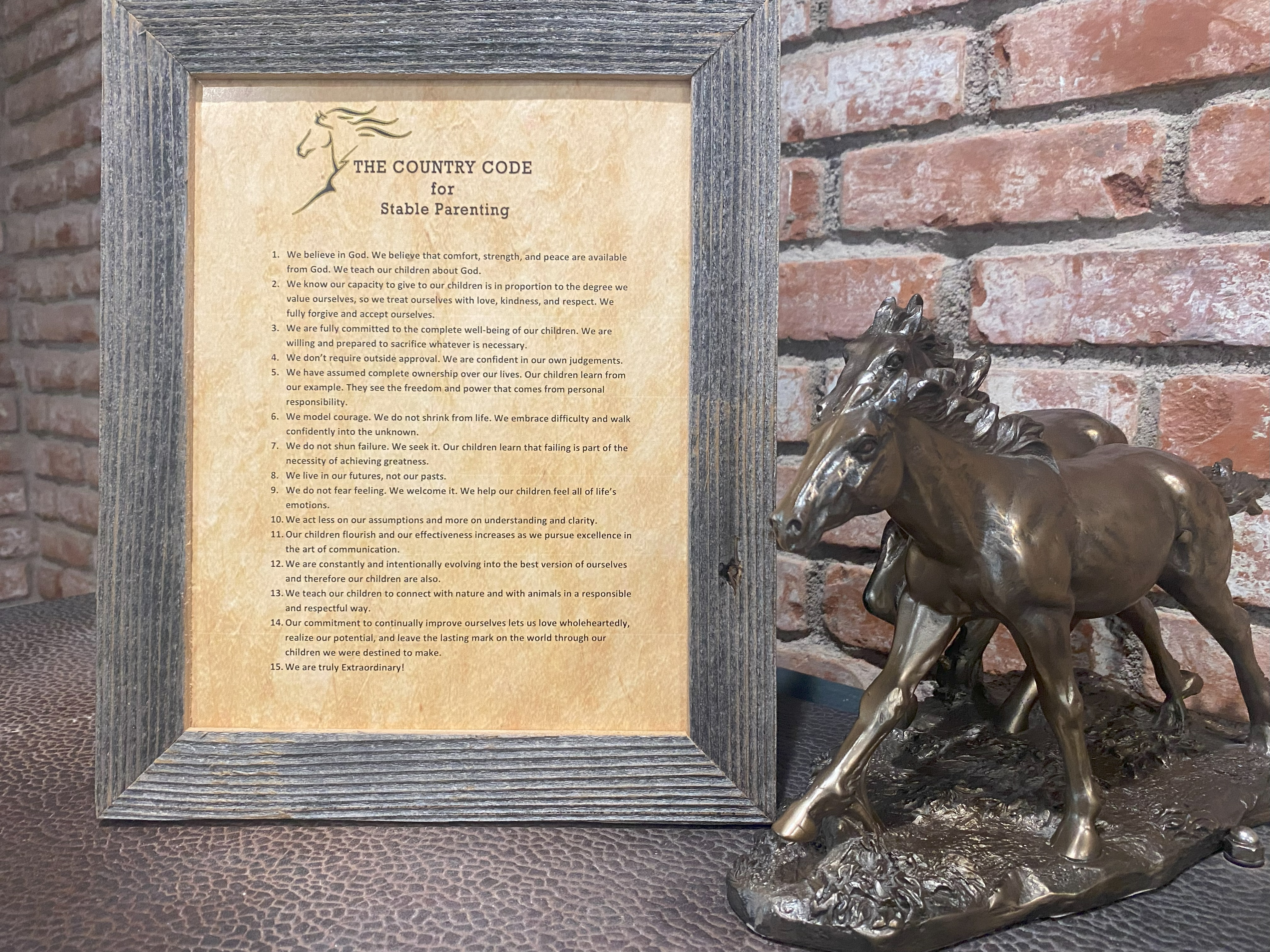
The Country Code for Stable Parenting:
Inspiration for parents. Enter your info below to get a free printable, frameable copy of The Country Code for Stable Parenting.
Print it. Frame it. Live It. Love It.
Live by the Country Code. It’s time to Thrive!
Print it. Frame it. Live It. Love It.
Live by the Country Code. It’s time to Thrive!
Thank you! Your submission has been received!
Oops! Something went wrong while submitting the form.